%20(1).jpg)
%20(2).jpg)


%20(3).jpg)
.png)
.png)


Your packaging line is down. Again. The operator stares at the machine, the machine stares back, and somewhere in the building a production manager lets out a long sigh. Sound familiar? You’re not alone.
Vertical form fill seal machines, VFFS, for those who mumble the acronym in their sleep, are the beating heart of every fresh produce packaging line. They run continuously, handle high volumes, and need to be precise, hygienic, and blindingly fast all at once. But that combination is exactly what makes them vulnerable. Not because of poor machines, but because of daily wet cleaning, products that are naturally moist, still respiring after cutting, and needing a different bag format every week.
In this article, we dive into the most common causes of VFFS downtime for producers of pre-cut vegetables, salad mixes, leafy greens, and fresh-cut snack produce, and give you a practical step-by-step plan to prevent them for good.
Fresh leafy greens demand more from your machine than you’d think
Packaging a bag of dry potatoes is already reasonably complex. But washed salad mixes, pre-cut iceberg lettuce, or a fresh stir-fry blend are a different story altogether. These products keep respiring after cutting, release moisture, and come in dozens of different SKUs, sometimes all running through the line on the same day. And every variant places slightly different demands on the machine.
VFFS downtime is rarely a coincidence. It’s the result of gradual wear, a film type that isn’t quite ideal, a changeover that was done carelessly, or a weigher that’s been slightly out of calibration for months. The machine sends signals, but in the daily rush of production, they don’t always get picked up in time.
Where things go wrong: the four most common causes of downtime
Film: the critical variable
It sounds basic, but film-related issues account for a surprisingly large share of VFFS stoppages. The wrong sealing temperature, a contaminated seal bar, or a film type that doesn’t quite match the product inside: the outcome is always the same. Leaking bags, rejected packages, line shutdown, and restart from scratch.
With moist products, think washed lettuce, baby carrots, or a salad mix carrying residual water, this is especially sensitive. Moisture on the seal bar means a weak seam, and a weak seam means returns. The solution isn’t ‘just paying closer attention.’ It’s a VFFS machine with adjustable seal parameters per film type and automated seal quality monitoring, so the machine flags the issue itself, rather than the operator.
Weight deviations that quietly add up
A gram short per package sounds harmless. Until you consider how many bags roll off the line per hour, and that inspectors don’t share your production pressure. Too heavy isn’t an option either: that’s giving the product away for free.
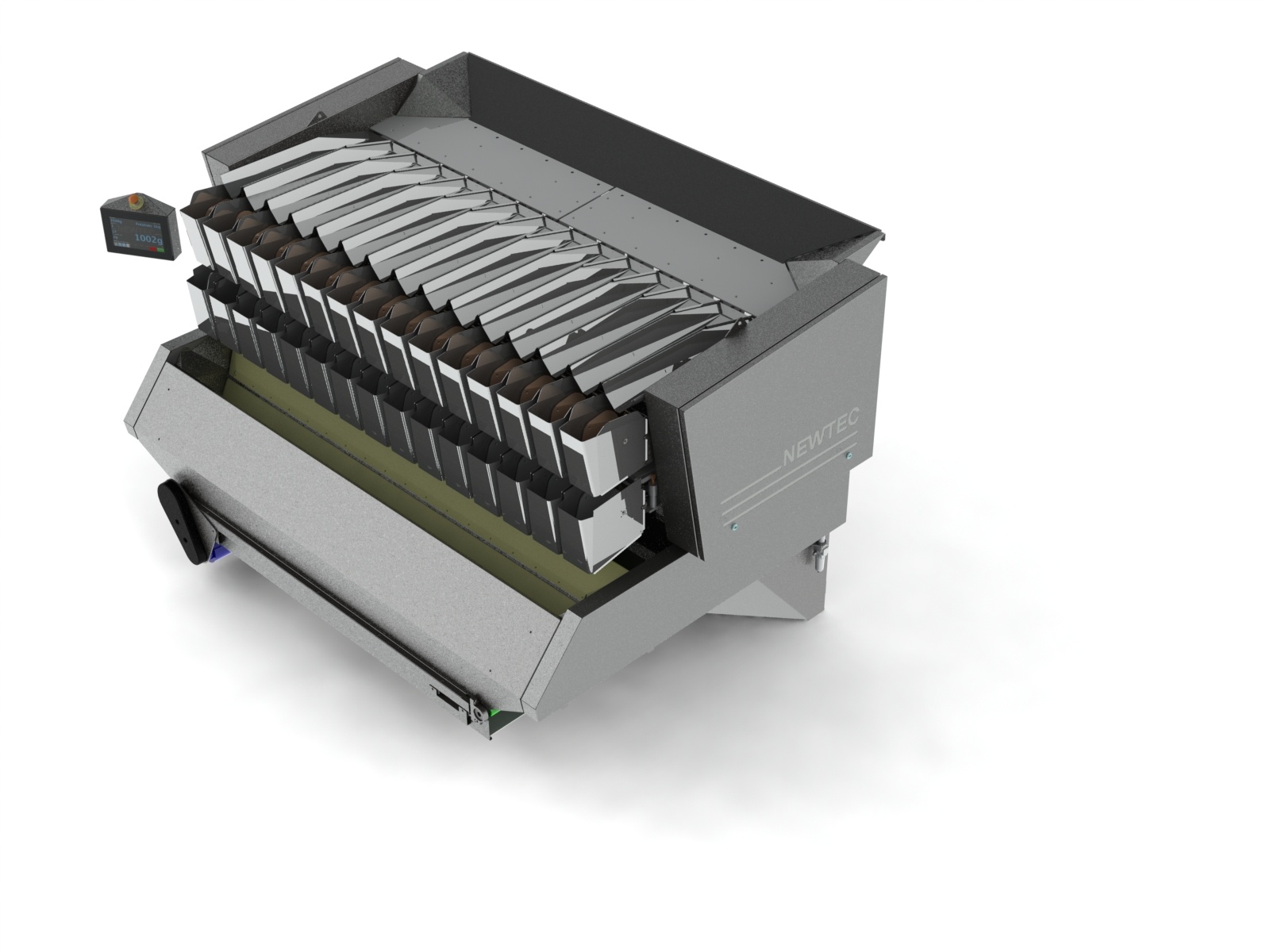
With products that have an irregular structure, sliced bell pepper strips, a broccoli and cauliflower floret mix, or loose salad leaves that vary considerably in volume per portion, accurate weighing is anything but straightforward. The weigher needs to be fast, but also smart enough to find the right combination of portions. A weigher that integrates seamlessly with your VFFS machine makes the difference between ‘good enough’ and ‘always right.’
Changeovers: the hidden time killer
How many SKUs does your line run per week? Ten? Thirty? And how long does each changeover take? If the answer to that last question is more than twenty minutes, you know where a significant chunk of your production capacity is going, not into packaging, but into setting up the machine for the next forming set.
Modern VFFS machines are designed so that forming set changeovers happen in minutes, not hours. Intuitive HMI controls, stored recipes per product, and guided changeover procedures mean operators can switch quickly and accurately without extensive training. That’s not a luxury, that’s just math.
Flying blind without process data
This is the silent cause that does the most damage: not knowing what’s happening on your line. Downtime is flagged too late, deviations aren’t recognized as patterns, and optimizations never happen because no one knows exactly where the bottleneck is.
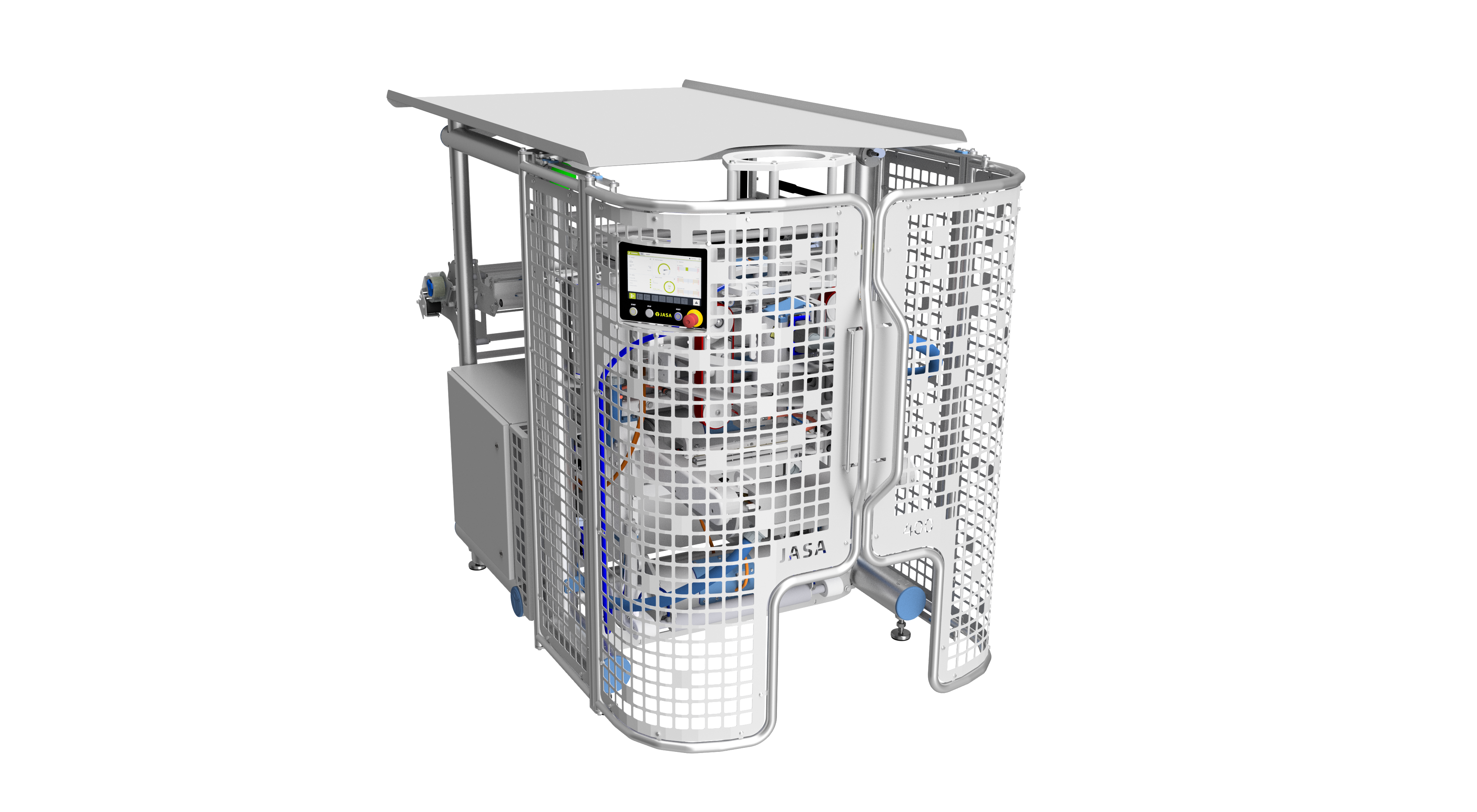
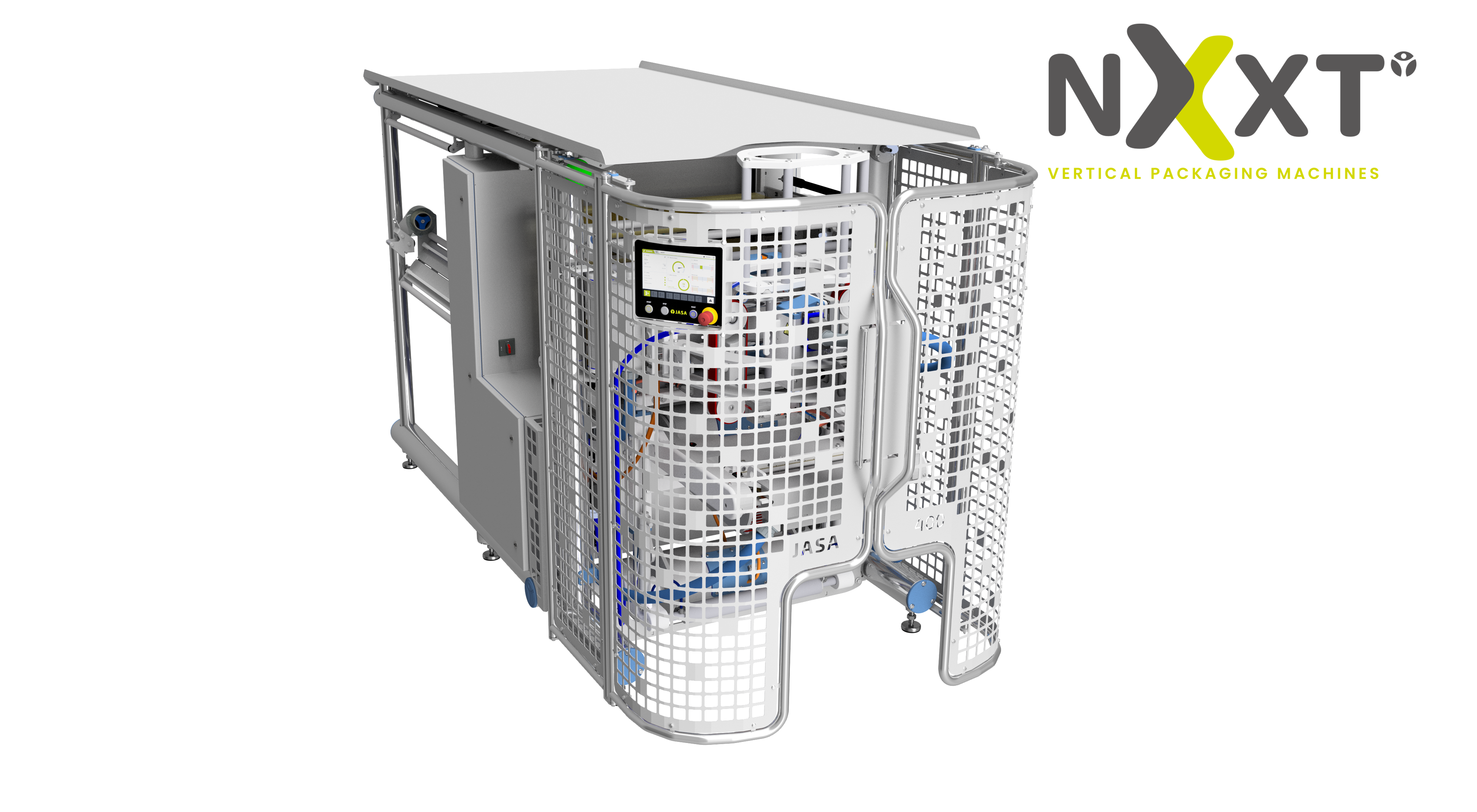
Modern VFFS machines, and the complete lines they’re part of, offer OEE monitoring and integration with your MES or ERP system. That way, you’re not just reacting to downtime, you can anticipate it. And prevention is always cheaper than repair. The JASA NXXT does this as standard, by the way, but more on that later.
.png?width=492&height=328&name=Jasa_modellen1760%20(1).png)
A practical step-by-step plan to reduce downtime
Good news: most VFFS downtime on fresh produce lines is preventable. Not through major investments or sweeping overhauls, but through a structured approach that starts with what you already know.
Start with your downtime history. Which faults and disruptions occur most often? At what time of day, after which changeover, with which product? Data is the starting point for every improvement, and if you don’t have that data yet, that itself is already a finding worth acting on.
Then audit your current machine and line. Are the seal bars still flat? Is the film path running correctly? Are sensors calibrated? Small deviations that seem harmless on their own often combine into persistent fault patterns. A periodic line audit prevents that kind of gradual decline.
Document your changeover procedures and train operators on standardized execution. Less variation in the process means less variation in the result. Then set up a preventive maintenance schedule based on running hours and machine-generated alerts, because reactive maintenance always costs more than preventive.
And honestly evaluate whether your machine still fits your current production demands. Machines that were perfectly suited at one point can become chronically overloaded as volumes grow or the product portfolio expands. That’s not a bad machine; that’s a machine that did its job too well.
Is it time for a new VFFS machine?
There’s a limit to what optimization can achieve. If your line consistently produces more than five to ten percent waste, if changeovers regularly take longer than an hour, or if your machine simply can’t handle new film types or bag formats, then it’s worth asking honestly whether further repairs make more sense than replacement.
When comparing VFFS machines for fresh and pre-cut vegetables, it’s about more than speed alone. How flexible is the system in bag formats, from a 5 oz snack bag to a 14 oz family pack? How is the hygienic design handled, since moist produce has different cleaning requirements than dry products? Can the machine integrate with your weigher, labeling, and end-of-line equipment? And how quickly can someone be on-site when something does go wrong? That last point turns out to be the deciding factor far more often than the technical spec sheet.
What sets JASA apart
Our VFFS machines combine high speed with low reject rates, support flexible bag formats for fast changeovers between SKUs, and integrate seamlessly with any type of weigher. The hygienic design is tailored to fresh, moist products, and our service team is on hand quickly when support is needed.
Want process data built in as standard? Take a look at the JASA NXXT, our latest-generation VFFS that includes OEE monitoring and smart alerting as standard. Less guessing, more staying ahead.
But perhaps what sets us apart most: we always start by asking what you need. Because a great packaging machine doesn’t start with the machine.
Frequently asked questions about VFFS machines for leafy greens
What is a VFFS machine and how is it used in fresh produce packaging?
VFFS stands for Vertical Form Fill Seal, a vertical packaging machine that forms film into a bag, fills it with product, and then seals it shut. For producers of leafy greens, salad mixes, and fresh-cut vegetables, it’s the most widely used packaging technology for bags ranging from 5 oz to 18 oz.
Why do moist vegetables cause more downtime on a VFFS line?
Moist products like washed lettuce or pre-cut salad mixes carry residual water onto the line. That moisture lands on the seal bar, leading to weak or leaking seals. It also builds up in the forming tube, reducing fill speed and increasing the risk of blockages. A VFFS machine with adjustable seal parameters and a hygienic stainless steel design significantly reduces these issues.
How long does a forming set changeover take on a VFFS machine?
On older or unoptimized machines, a forming set changeover, for example, switching from a 5 oz snack bag to a 14-oz family pack, can easily take an hour or more. Modern VFFS machines with stored recipes per SKU and intuitive HMI controls bring this down to five to ten minutes for a trained operator. With multiple changeovers per day, that quickly adds up to hours of recovered production time every week.
What criteria matter when choosing a VFFS machine for leafy greens?
The key criteria are: suitability for moist products (hygienic design, IP rating), flexibility in bag formats, integration with your weigher and end-of-line equipment, availability of OEE monitoring, and, often underestimated, the service level of the supplier. A machine that ships fast but leaves you waiting for support will ultimately cost more than a well-supported investment.
When does it make more sense to buy a new VFFS machine than to keep repairing the current one?
If your line consistently produces more than five to ten percent waste, if changeover times regularly exceed thirty minutes, or if your machine can no longer handle new film types or bag formats, replacement is often cheaper than continuing to patch things up. An honest line audit quickly reveals where that line is.
Wondering whether your VFFS line is still performing at its best, or ready for the next step?
Our specialists are happy to think along with you. Schedule a call and let us analyze your production line.
→ Schedule a meeting with JASA
→ Explore our VFFS machines