%20(1).jpg)
%20(2).jpg)


%20(3).jpg)

.png)
.png)


Introduction
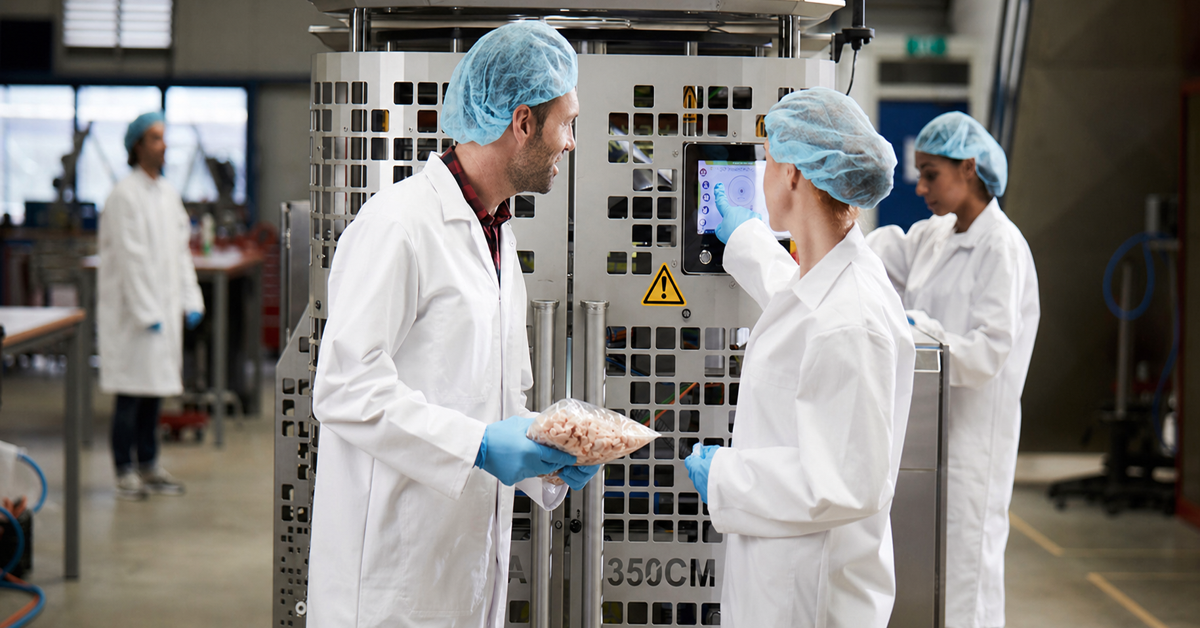
The consumer sees the end result: neatly packaged chicken pieces, fresh salmon, or seafood, ready and safe on the grocery shelf. That trust seems like a given, but behind that product lies a fully integrated packaging process where nothing is left to chance. From weighing and packaging to end-of-line: every link in the chain counts.
In today's food industry, high care is no longer up for debate. It's a baseline requirement, not just for the machine, but for the entire line. And that's precisely where the challenge shifts: the question is no longer whether things are properly set up, but how stable and efficient the total system remains under the pressure of daily operations.
Anyone who takes a close look at complete packaging lines in high care environments will find that the biggest risks rarely lie in what clearly goes wrong. They hide in what's considered normal: in design details, operational habits, and cleanability gaps that only surface when something goes wrong.
In this blog, we cover five common mistakes in high care packaging environments for meat and seafood at both the machine level and across the complete line, and what they mean in practice for output, downtime, and food safety.
High Care Is Not a Checklist — It's a Chain
In mature organizations, high care is part of a broader whole: design, process, and execution come together in a chain that has to work perfectly every single day. The machine, the people, and the process are equally critical; one weak link impacts the entire line.
Especially in environments producing at scale for retail such as meat processors and seafood processors supplying grocery chains, consistency isn't an aspiration; it's a hard requirement. Because ultimately, the product ends up on the consumer's plate. They expect the same thing every time: fresh, safe, and reliable. That doesn't start on the shelf. It starts on the packaging line.
5. Common Mistakes That Put High Care Performance Under Pressure
Mistake 1: Cleanability Is Overestimated
Every machine in a high-care packaging line is designed with hygiene as a starting point. But there's a significant difference between a machine that looks clean and a machine, or a complete line, that can actually be fully cleaned.
Dead zones areas that are difficult to reach during cleaning and inspection, remain a persistent structural risk. Build-up of moisture in joints, unnecessary horizontal surfaces, and hard-to-disassemble components can leave microbiological risks behind even after a thorough cleaning cycle.
The problem: this only becomes visible during an audit or an incident. Not in the daily cleaning protocol, because on the surface, everything looks fine.
What to do better: when purchasing machines and designing a complete line, actively assess hygienic design, in line with EHEDG guidelines. A line that's truly cleanable supports food safety structurally, not just situationally.
Mistake 2: Hygiene Depends on People, Not the Process
High care procedures are documented and standardized. Yet execution still depends on daily reality: shift changes, production pressure, and small variations in how tasks are interpreted create inconsistency even when the process looks good on paper.
The more food safety relies on individual discipline, the greater the risk of unwanted variation. That applies to cleaning routines, but equally to the correct operation of line components and the timely identification of process deviations.
What to do better: invest in further automation and standardized work instructions that structurally reduce variation, not as an added control layer, but as an integral part of the line setup.
Mistake 3: Cleaning Gets Squeezed by Production Schedules
Cleaning is a fixed part of every high-care line, and for major producers, cutting it short is not a serious option. The risks are too high and the consequences too visible. But that doesn't mean the process always runs flawlessly. It's precisely under production pressure that small errors creep into execution: a step done a little less thoroughly, a changeover rushed slightly, a check that doesn't get the attention it deserves under time pressure.
These small compromises accumulate. Not as a deliberate choice, but as a byproduct of operational pressure. The result is a cleaning process that is structurally less effective than intended.
What to do better: a packaging line designed for fast, thorough cleaning reduces the friction between production and hygiene. Cleaning time isn't lost production time; it's part of a well-functioning system.
Mistake 4: Design and Daily Use Don't Align
Machines are designed individually with clear hygienic principles in mind. But within a complete packaging line for meat or seafood, a new reality emerges: the layout, the product flow, and the interaction between machines determine how the system is actually used day to day.
Those small gaps between design intent and daily practice are rarely dramatic, but they are consistently present. They directly affect how accessible components are for cleaning, how many manual steps are required, and how reliably the line performs over time.
What to do better: when setting up a high-care packaging line, look beyond individual machine specs. Factor in line integration, layout, and real-world usage scenarios. A well-designed machine in a poorly integrated line will consistently underperform its potential.
Mistake 5: Problems Only Become Visible When Something Goes Wrong
Many high-care lines run stably until something breaks down. Small deviations in output, cleaning efficiency, or machine performance spread through the process and stay under the radar because individually they don't trigger any alarms.
It's only when a disruption, a recall, or an audit occurs that the underlying tension in the system becomes visible. Reactive behavior becomes the norm, while proactive performance management could have prevented the loss entirely.
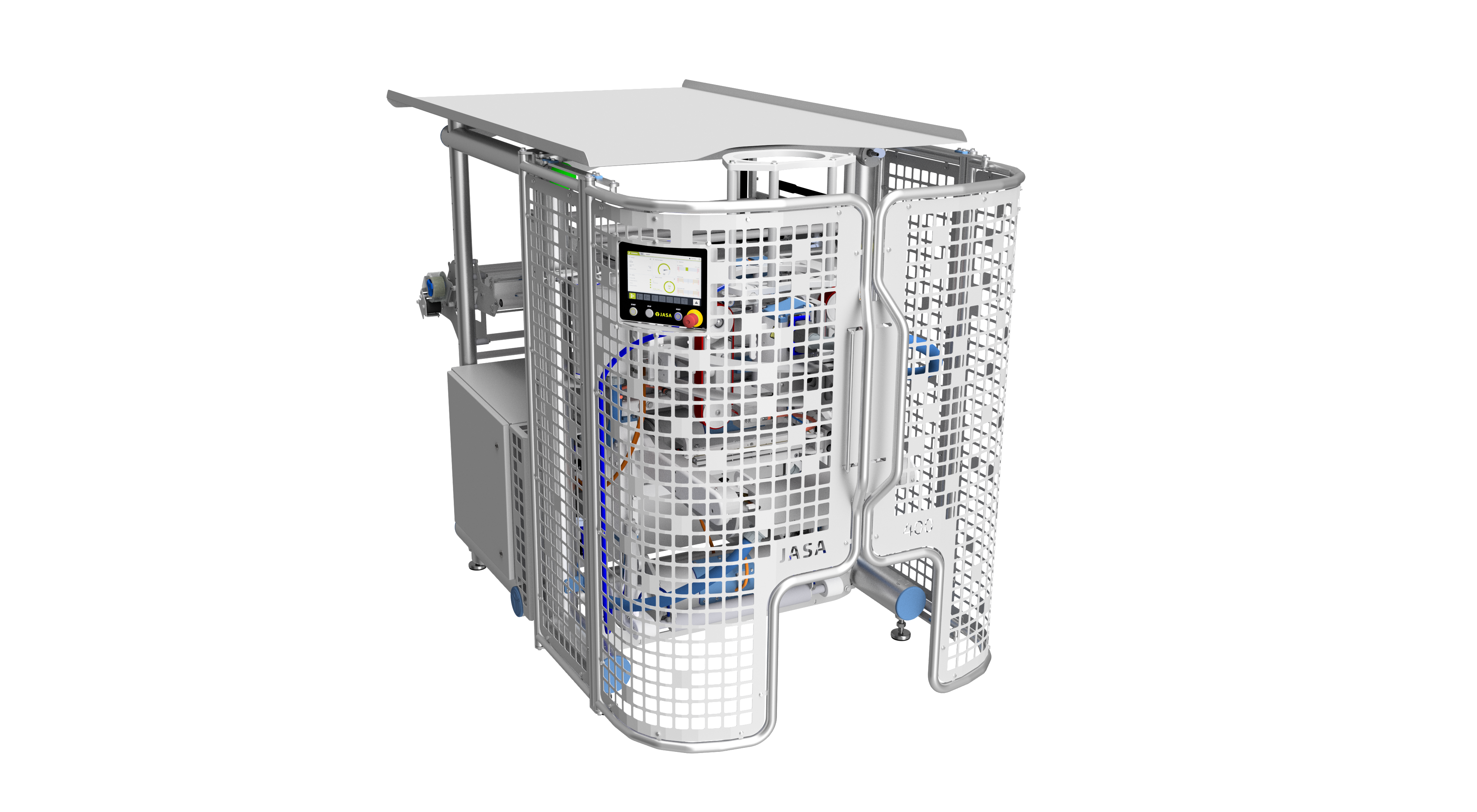
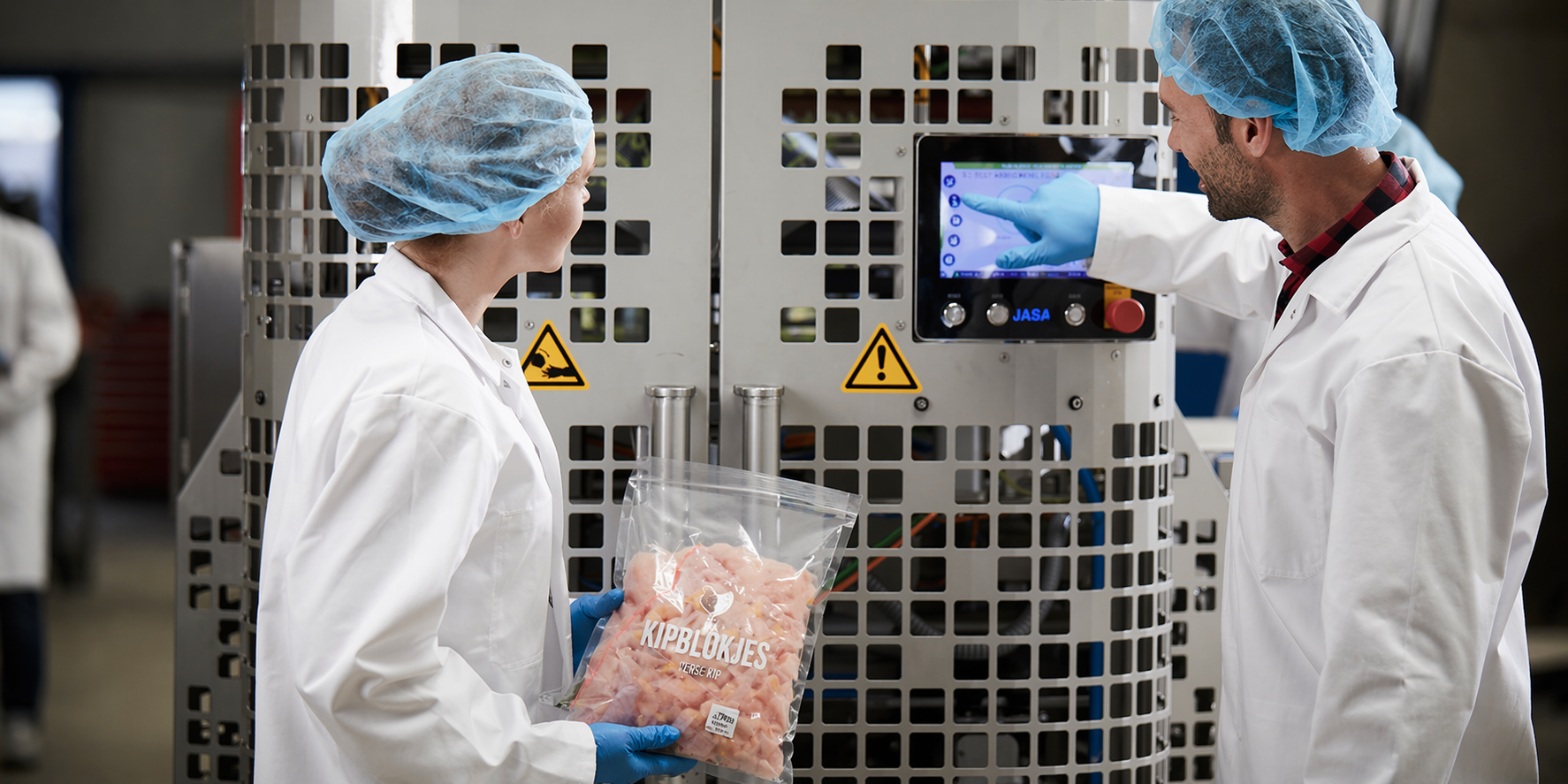
What to do better: drive decisions with data and real-time insight into daily line performance. Leading organizations track not just output, but also cleaning time, downtime, and per-shift deviations — and course-correct before things escalate. The JASA NXXT does exactly that: via JASA-connect™, data from all moving parts is continuously monitored, so you always know how your line is performing.
The Real Problem: High Care Quietly Costs You Output
The costs of these mistakes are rarely visible directly. Downtime gets accepted as part of the process. Cleaning time gets built into the schedule as a fixed cost. Output loss doesn't get calculated through to its actual impact on margin and capacity.
Yet the costs are there, spread across the process, hidden in the daily routine. In an environment where margins are tight and speeds are high, that's a risk that adds up.
Why This Is a Risk Right Now
The margin for error is shrinking. Production speeds are higher, retailer requirements are stricter, and margins are under structural pressure. What was acceptable variation five years ago is now a competitive disadvantage.
On top of that, pressure from supply chain partners is increasing. Major retail customers are setting higher and higher expectations around food safety assurance, not just at audit time, but as an ongoing requirement. That makes the quality of your packaging line directly visible in your customer relationships.
Conclusion
Many high-care environments are functioning, but not at their full potential. The biggest losses often don't come from what's clearly broken, but from what's considered normal: a cleaning cycle that runs a little short, a machine that's hard to access, a shift that does things slightly differently.
The five mistakes in this blog are not exceptions. They're recognizable across a large part of the meat and seafood processing industry, including at companies that take high care seriously. That's exactly where the opportunity lies: not in a system overhaul, but in sharpening what's already in place.
Want to Know Where Your Packaging Line Can Improve?
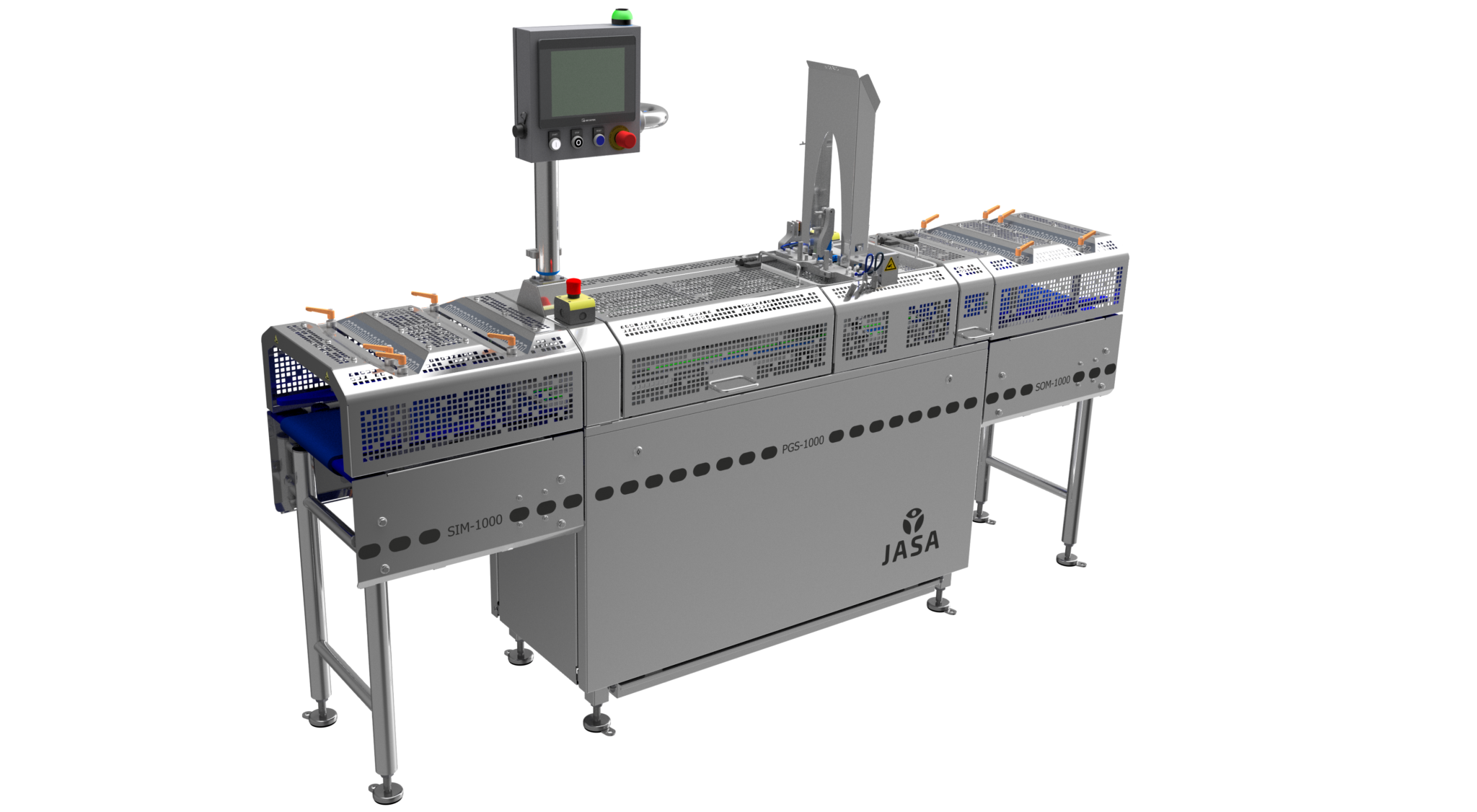
JASA develops vertical packaging machines and complete line solutions specifically designed for high-care environments. From weighing and packaging to end-of-line: with hygienic design, optimal cleanability, and seamless integration as the foundation for meat and seafood processors who produce at scale and demand reliability.
Download the checklist and find out where your line stands.

Or reach out directly to talk through your specific situation with one of our specialists.
Learn more about JASA meat packaging: jasapackaging.com/meat-packaging
Learn more about JASA fish & seafood packaging: jasapackaging.com/fish-seafood-packaging