%20(1).jpg)
%20(2).jpg)

%20(3).jpg)
.png)
.png)


Introduction
Hygiene in leafy greens is not up for debate. Everyone in the supply chain, from grower to retailer, understands what is ultimately at stake: fresh, safe leafy greens on the consumer’s plate.
Within Controlled Environment Agriculture (CEA), nothing is left to chance. Leafy greens are cut, processed and packaged directly for retail and foodservice. These are raw products that reach consumers without further preparation.
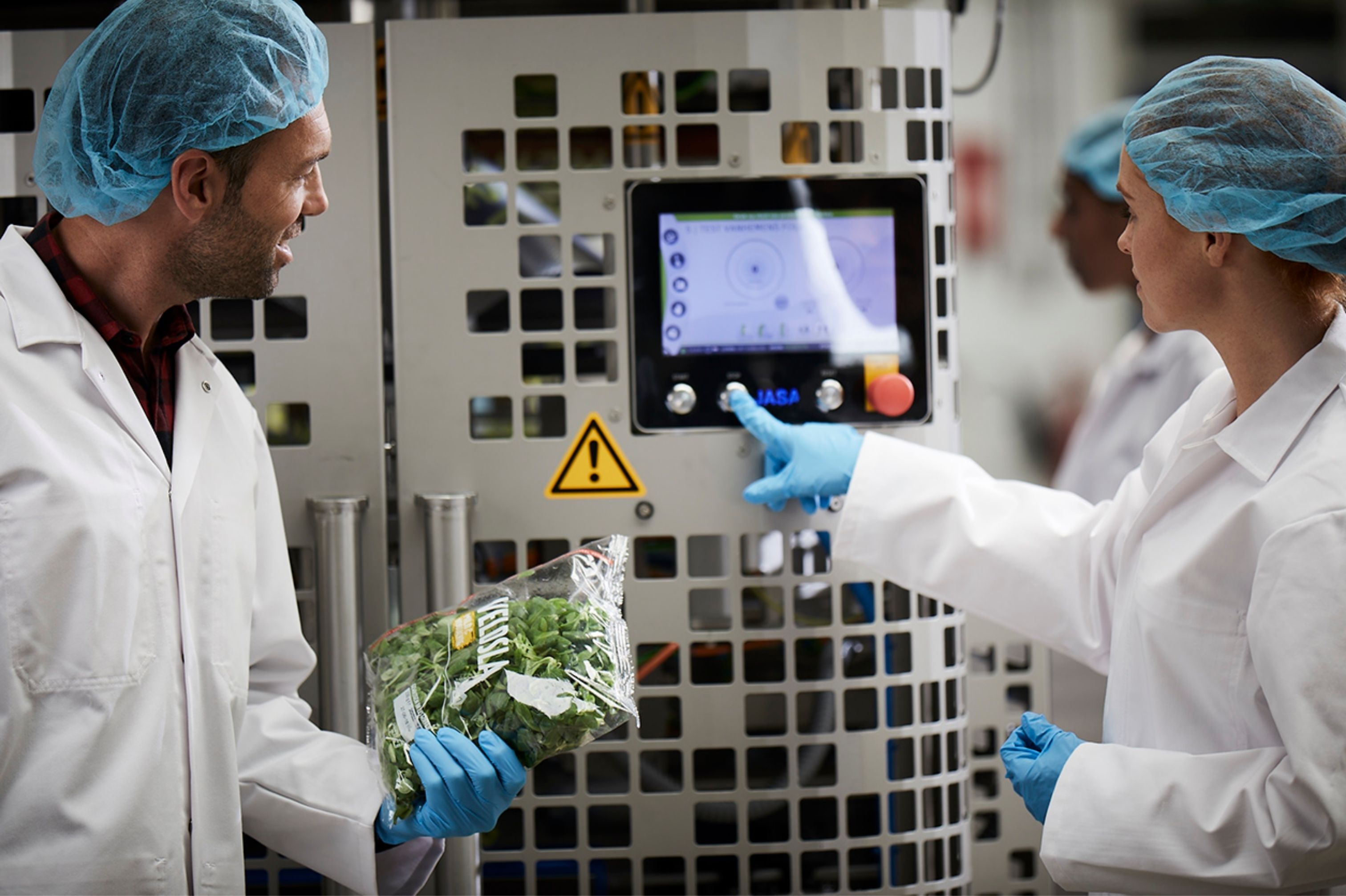
As a result, food safety is largely determined during processing and packaging — an environment where high-care standards are essential. In practice, high-care means that the product, the production environment, and personnel are organized in a way that minimizes the risk of contamination during processing and packaging.
However, establishing high-care procedures does not automatically guarantee consistent hygiene performance.
CEA operations run continuously. Leafy greens are produced year-round, volumes are stable, and packaging lines operate every day. In this daily reality, hygiene shifts from an operational task to a design consideration. And that is where it matters who is involved from the very beginning.
From working in high-care to controlling high-care
A high-care environment may be well organized. But does it remain stable under daily intensive use?
In CEA production, the real challenge is not a single mistake, but consistency. Packaging lines must support the same hygiene standard every single day.
And let’s be honest: the easier a line is to clean, the easier it is to work with. An accessible, well-structured line creates confidence on the production floor, less searching, fewer uncertainties, and less dependence on “how was this cleaned last time?”
Ultimately, it comes down to trust in the product consumers place in their shopping carts without hesitation. Simplicity in design plays a crucial role here. Simple systems are easier to clean and easier to operate.
And that is exactly where thoughtful line design proves its value, something that is often determined long before a line is installed.
Product intake and initial handling
Leafy greens enter the processing area in a controlled way. Routing and product flow are logically organized. But do these flows continue to function efficiently during daily production and high utilization? Often, that depends on how well the line was designed from the start.
Product guidance throughout the line
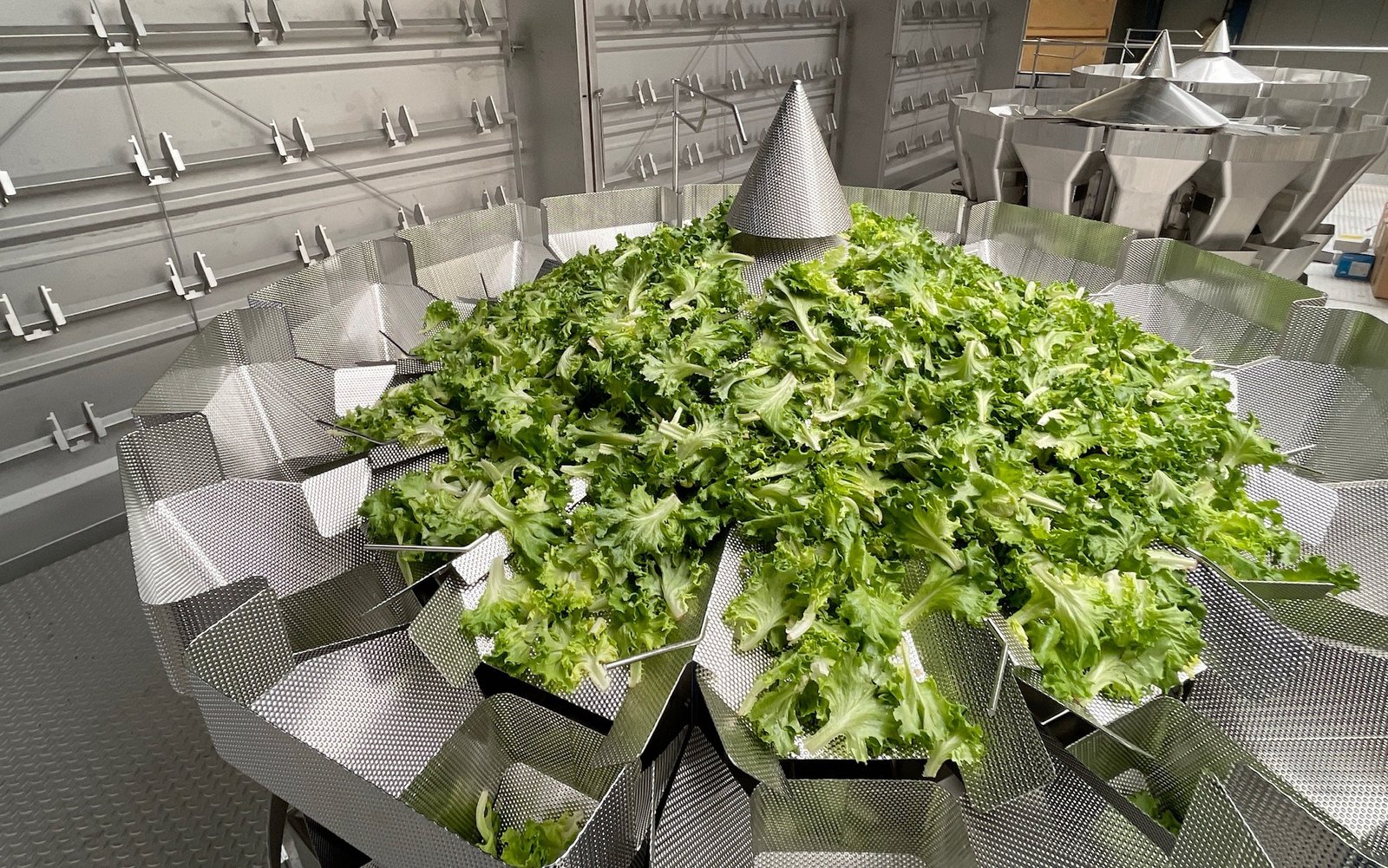
Leafy greens have a large surface area and are sensitive to handling. During daily production, small product accumulations may occur in areas that are technically reachable but not always obvious during routine cleaning.
This is not necessarily a mistake, but over time, it can influence hygiene stability.
Cleaning and changeovers
Cleaning is part of daily operations. But in leafy greens packaging, the challenge is not a single deep cleaning cycle; it is consistency.
What matters is not only how clean the line is today, but whether it supports the same standard every day and every shift, regardless of production pressure.
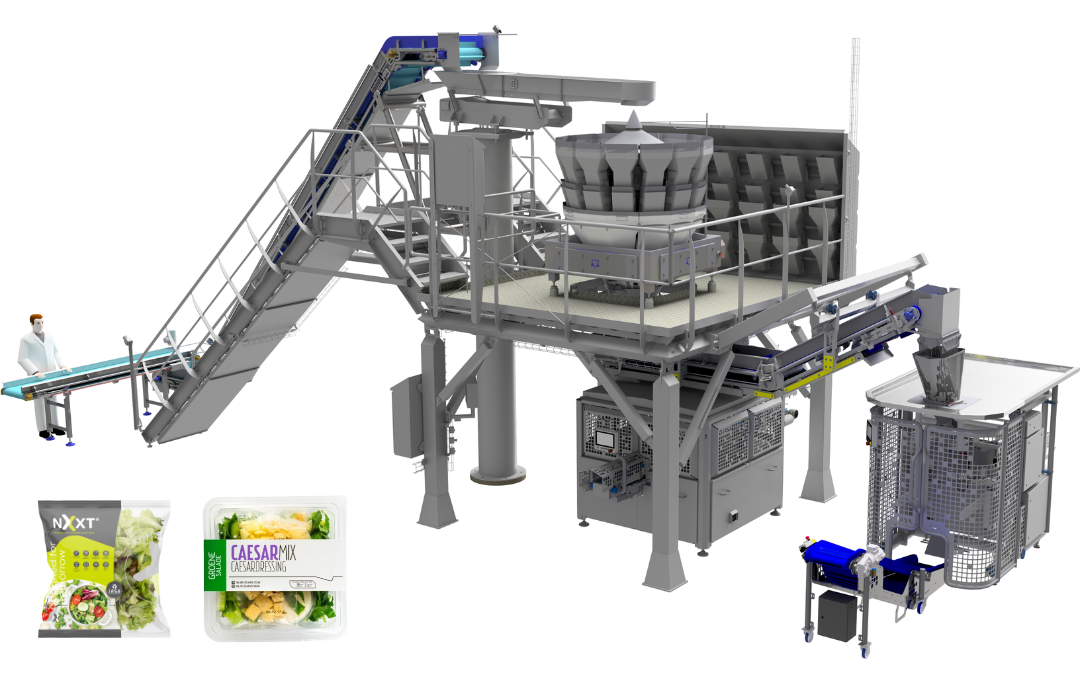
That is why it pays off when cleanability is already considered during the design of the packaging line.
In this sense, high-care in CEA leafy greens becomes less about procedures and more about how the system behaves during continuous use.
Looking ahead in CEA leafy greens
CEA leafy greens have matured as a category. Production is stable, demand continues to grow, and packaging plays an increasingly important role in supply reliability.
Stricter regulations are not the next step. they already exist.
The real question is how high-care standards will hold up in CEA leafy greens packaging lines as production scales and operations intensify.
Ultimately, design determines whether high-care remains a procedure — or becomes a natural part of daily operations.

Want to learn more?
Curious which trends are shaping the future of CEA leafy greens production and packaging? Download the Leafy Greens Trend Report for a complete overview of market developments within CEA.